It has been over twenty years since the nutrition label has been updated, and the Food and Drug Administration (FDA) is now releasing a Nutrition Facts face lift! Nutrition facts are an important part of managing your health because they can tell you not only what type of food you are taking in but how much energy it provides. Take a look at what to expect:
OLD: NEW:
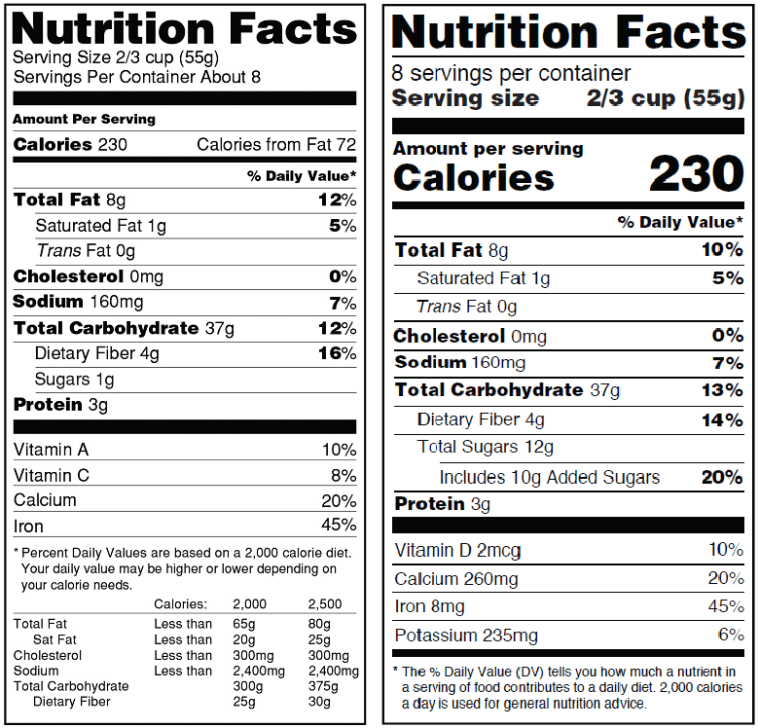
Per the Food and Drug Administration, the biggest changes are the introduction to the “added sugars” and the increase in font size of the “serving size” and calories within that serving.
New research has shown, on average, Americans are consuming over the 10% of their diet with added sugars, which can make it difficult to meet your needs with other essential nutrients. Because of this, the FDA decided to require manufacturer’s state whether the sugars are naturally occurring from the product or added in from other sources. The World Health Organization recommends every age consume less than 10% of their daily intake from added sugars and less than 5%, or roughly 25 grams per day can provide additional health benefits. It is important to note that “added sugars” can also be included in healthful foods, it may just mean you need to limit portions.
It is easy to forget that nutrition labels show calories per serving, not per container. Especially in single serve packaging, consumers can easily confuse the amount of calories you are actually taking in. In light of this issue, the FDA decided to require manufacturers highlight and bold the serving size and the amount per serving. Visually, this can help consumers make informed choices on what and how much is appropriate to eat.
Nutrients such as Vitamin D and potassium have also been added to the label due to a rise in population deficiencies, according to the FDA. Very few foods carry natural sources of vitamin D. Sunlight exposure and fatty fish such as salmon or tuna are significant sources. There are also many foods such as milk and mushrooms that are fortified with vitamin D. Potassium is in a variety of foods including potatoes, bananas, and beans. Maintaining a diverse diet and checking your labels can keep you and your family healthy!
 thetastespoon.com