Last week, the Office of Disease Prevention and Health Promotion (ODPHP) came out with the new 2015-2020 Dietary Guidelines update and just in time to help you find your New Year’s Resolution. Here is a simplified overview:
This infographic shows Americans tend to under eat the healthy stuff and overeat the stuff we don’t need in our diet. They say we can do better. I agree.
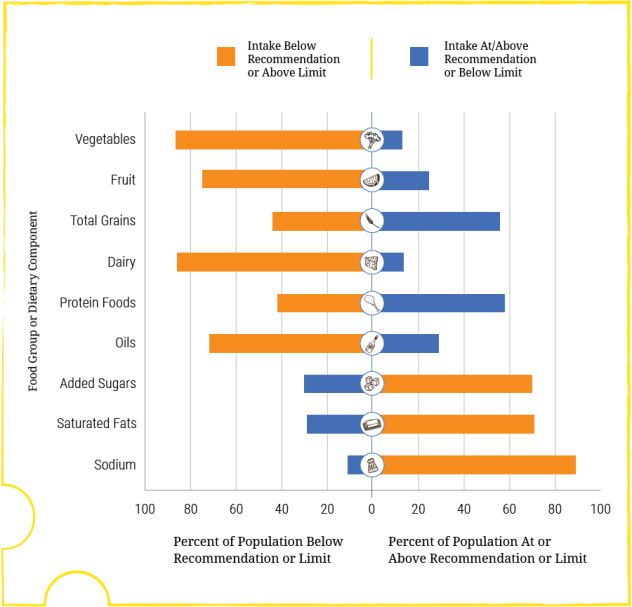
There is a substantial amount of research that shows the healthy stuff like fruits, vegetables, whole grains, lean protein, low-fat dairy, and some oils reduce the risk of conditions like diabetes or cardiovascular events. Spreading these foods out within a day or week span can form a healthy meal pattern that promotes a healthy weight as well as reducing the risk of co-morbidities. And because too much added sugars, saturated fats, and sodium are associated with poor health outcomes, the ODPHP recommends limiting the amount you eat.
The amount of food within each food group also makes a difference. And all that depends on you, your age, and your activity level, to start. Typical consultations with a Dietitian are a little more in-depth than that, and we look at more factors when computing your caloric needs, but this is a good place to start. Once you find your caloric needs, you can get an idea how much of each food group you should be eating. Or you can look at other healthy eating patterns of the Mediterranean diet or the Vegetarian diet.
What about physical activity? Oh yes! It is a must. Adults need 150 minutes of moderately intense physical activity (50-69% of your maximum heart rate) and strength training at least twice per week. So don’t forget leg day and be bold when you run because the activity is not only helpful with weight but also can prevent early death, heart disease, diabetes, depression and many other conditions.
So in summary, quality of your diet, portion size, meal patterns, and physical activity matters. Since it is January, and you’re thinking about what goals you are making for 2016 (or, at least, now is a good time), reflect back to what your habits have been or are currently. Small, measurable goals will make a difference in long-term change. Your health and quality of life are crucial, make sure one of these changes makes your list. Need more help? Contact us.
 thetastespoon.com